Monthly Archives: November 2012
Margaret Thatcher on Sovietology and Gorbachev Reforms
Thatcher saw the two groups of Sovietologists:
1) stressing the Gorbachev reforms,
2) limiting as many changes as possible in the USSR.
Gorbachev’s intentions were limited but the consequences that his reforms would have across the USSR would cause erosion of discipline. Gorbachev had liberalized the election process for candidates in the Soviet body politic. Gorbachev called for restructuring (perestroika) and acceleration of their economy. He clearly wished to function in a socialist system. Thatcher consulted Reagan, Germany and France before heading to Russia. When she visited, Thatcher made a scathing speech about Russian failure and weakness just before her visit. When she was questioned about her harsh statements before coming to Russia, Thatcher fired back with even more vitriol. They had a very public debate of ideas. Thatcher attacked Gorbachev over Afghanistan and Jewish discrimination. Thatcher clearly saw the cracks in the Soviet system, which her rhetoric emphasized.
Lee Iacocca: Reject Corruption + Remember That Ideas Matter
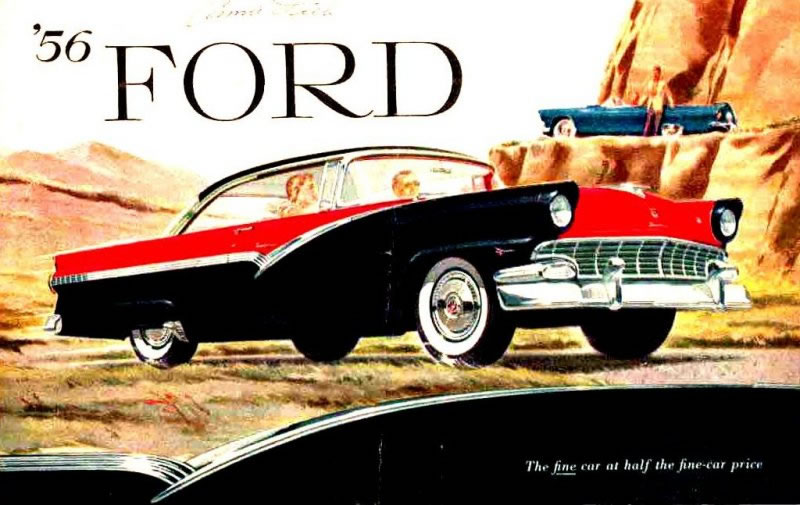 In 1956, Iacocca came up with an inventive new way to sell cars when he developed the “56 for ’56“. The policy meant that any customer that bought a new 1956 Ford should be able to do it with a 20 percent down payment, followed by monthly payments of $56 for three years. After the idea was applied across Ford, Iacocca was thought to be responsible for the sale of an additional 75,000 extra cars. Iacocca’s initiative meant that his profile was enlarged resulting in a big promotion to Dearborn, Michigan i.e. headoffice as the head of car marketing. Here, he met Robert McNamara who was one of the Whiz Kids brought in from the Air Force Statistical Strategy team by Henry Ford II to provide managerial talent at the top of Ford.
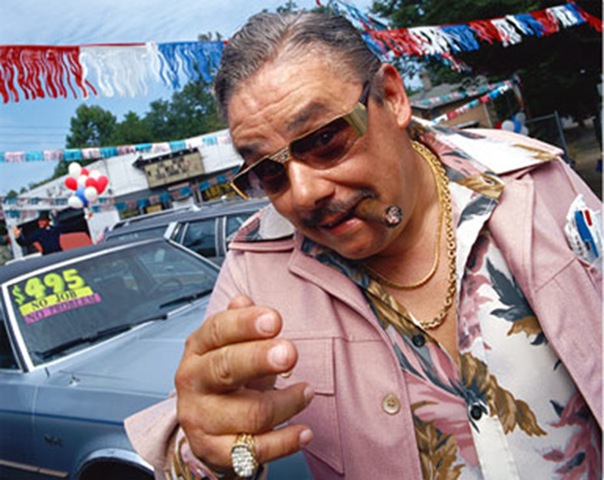 When Lee worked at Chester, Pennsylvania as a desk Sales rep, he witnessed corruption when reps took bribes, gifts and favours from dealers in order to get a larger allocation of cars into various dealerships. He worked in sales for over a decade being patient with his colleagues. Fleet sales meant allocating new cars to dealerships, since Lee was in sales, and there was a backlog of cars, this gave him a lot of power at an early age. Others would play fast and loose with the truth to create larger bonuses for themselves. Iacocca did not.
 This is a synopsis & analysis based on Iacocca: An Autobiography and other miscellaneous research sources. Enjoy.
Margaret Thatcher on the Star Wars Missile Defence Program
 Thatcher supported the Strategic Defence Initiative (SDI) program which stipulated an aggressive weaponization of space. Reagan’s objective was to rid the world of nuclear weapons, according to Thatcher. Thatcher, however, disagreed (nuclear weapons are a deterrent to war in Thatcher’s estimation) but she knew that she must always remain a staunch ally of the US. Russians didn’t like the SDI proposal because they were concerned that the US shield would end the deterrence against US attack. For Thatcher and others conservatives, the SDI programme was central in the victory of the West during the Cold War. The causation is deterministic in their opinion. SDI = weakened USSR.
 The SDI opened up new complications and dimensions to the American and British nuclear deterrence strategy. SDI had implications for Cold War agreements about the weaponization of space. The technological advances would be helpful. The Russians had already begun experiments with tracking systems to repel an American attack. Thatcher believed it made sense to go forward with SDI in order to deal with indirect accidental launch at the very least. The MAD deterrence was the primary reason there had not been a nuclear war according to Thatcher. She didn’t care that Russia felt the SDI reduced deterrence. She felt that it was part of scientific development; it must be carefully controlled and regimented. For Thatcher, science cannot be stopped. She even argues that the Russians will develop this system as well but if they can’t then they deserve to be destroyed.
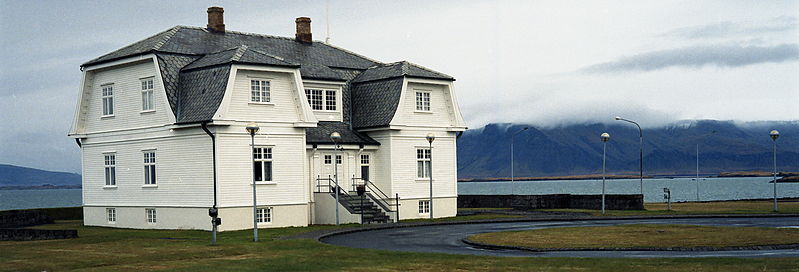 Thatcher and Reagan agreed on the principles of SDI treaty with Russia at the Iceland Summit (Reykjavik Summit) that stated:
1) the US and Western nations would not aim for superiority but stability with Russia,
2) SDI development would have to coincide with treaties negotiated,
3) the aim is to enhance deterrence,
4) East-West should try to reduce systems on both sides. The Reykjavik, Iceland Summit was crucial in ending the Cold War.
 Gorbachev became the leader of the USSR in 1985. He recognized that the USSR economy was in terrible shape and would require massive reforms. The USSR laid a trap for the US during negotiations at the Iceland Summit: they made concessions on British and French deterrents not being included in the Intermediate-Range Nuclear Forces Treaty (INF). Those reductions in nuclear arms could occur on hard numbers NOT IN percentages which would disadvantage America with its larger stock-pile. Gorbachev said he would agreed that his nuclear arsenal would be halved in 5 years time. A huge concession! Gorbachev then sprang the trap: SDI must NOT continue….Reagan rejected the deal with Gorbachev since Gorbachev was making concessions he could not retrieve at its conclusion. It was obvious that Gorbachev had wilfully released the numbers on nuclear weapons as a concessions with the trap in mind ie end SDI. Even Trident would have ended had this proposal been accepted according to Thatcher. In these skillful negotiations, Reagan “had written one of the last chapters on the ‘Evil Empire’ that was the USSR which would be relegated to an ash heap in history” according to Thatcher. An INF agreement would have been given priority by Thatcher although she rejected full nuclear disarmament as impossible.