How to Win an argument: Warren Buffett

Learning How to Effectively Use Praise and Criticism is the Primary Task of a Manager: We need praise, because it inspires us to do better. You do not want to criticize for something you did or didn’t do. We often do not like criticism. No one wins friends without praise. Using both praise and criticism is the most effective. You should praise the small, and large, never miss an opportunity, and remember people’s names. Nothing is sweeter to another person, than to hear their own name. You should always acknowledge an idea, then provide counter-examples.

PRAISE the person, CRITICISE the category: your should be quick to praise, an individual banker, but you should blame the banker indirectly.

How To Win An Argument: To win an argument, you sometimes have to lose. The best way to argue is to ensure that the others do not lose face. It is better to agree with someone, and then have that person listen to your ideas. You need to reduce conflict. Benjamin Franklin’s business and life philosophy is powerful. You should avoid arguments. You should not use words that are certain, but do not contradict them abruptly. You should modestly position your views. Avoiding arguments is a way of accepting other people’s opinions.

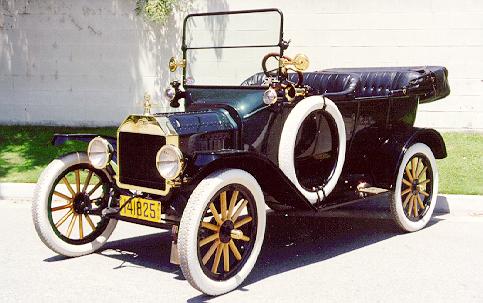
Henry Ford said that if there is one secret of success it is to see things from other people’s position. You should seek out what people want. Connect their wants with your goals.
Encourage Others To Come Up with the Right Idea: Warren likes to set their own goals and standards, employees will set the standards higher. Warren’s silence, drives their performance. No one likes to be ordered about. If it is your own idea, then you will act on something with conviction. Instead of saying “don’t swim in the lake” you should illustrate the matter “If you swim in the lake, you will be eaten by a shark.” You should ask what your subordinates want from you. Then ask what you would expect from them.

Ask Questions Instead of Direct Orders: asking questions makes you more palatable. It’s better to let people figure something out themselves. Warren Buffet peppers his managers with tough questions, they are direct orders that have been masked.

“This is not the way to do it.” versus “Is there a better way to do that?”

When you are wrong you should admit it: no one can stand someone who won’t admit that they are wrong. Managers who don’t admit that they are wrong which causes a festering. Warren is upfront about mistakes made. People respect honesty. Warren wins the trust of his shareholders.

[This is a précis of Warren Buffett’s Management Secrets. More is forthcoming]

About Rational Choice Theory

Rational Choice Theory

Rational Choice Theorists believe that bureaucrats and politicians are self-interested, seeking to feather their own nests. The private interests of bureaucrats and politicians is actually at the heart of government, not the people they claim to serve. This is what we call public choice economics. Therefore, the behaviour of a bureaucrat needs to influenced by incentives. Right-leaning people are more inclined to believe that all players in government are self-interested, and want to minimize their workload. The fundamental assumption is the bureaucrats can be made to more productive if they are treated as rational actors……selfishness always leads to the best outcome according to those who believe in Rational Choice Theory>>>>>

Critique of Rational Choice Theory:

1)     Human Unpredictability: this covering law fails because actors may not seek rational means for achieve their ends: do not have full information & do not make calculations based on the Rational Choice Theory rubric of decision-making: only two groups of people think this way: 1) social scientists & 2) sociopaths. According to Elster, for most individuals, “the ability to engage in strategic reasoning is severely limited.”[1] Why should liberalizers, moderates, radicals and hardliners be expected to engage in backward induction about the possible outcomes in the game Przeworski provides?

2)     Basic Assumption of Rational Choice Theory is wrong: that NOT all motivations are for material ends: “joining a political rally for the cupcakes?” (Muhlberger, 1998)

3)     Methodological individualism: Rational Choice Theory does emphasize agency but it is methodological individualism in a macro-level aggregation of complex groups.

4)     Too Deterministic: does not accept multi-casaulity, feedback loops.

5)    Excludes all structural approaches of analysis: Rational Choice Theory then operates in a vacuum so once the game starts: structure, ideology, historical, geographic, endogenous, exogenous factors disappear & are no longer causal variables until the game ends.

6)    RCT Rational Choice Theory is tautological: it is only an explanatory model: has low predictability. Having outlined all possible options for the four actors – as is necessary – Przeworski’s model demands that those static options be the only outcomes imaginable. There are no exogenous factors that can change the outcome in this game. The need to achieve equilibrium, where all actors have balanced outcomes, quickly becomes tautological. This imposition of equilibrium, inherent in rational choice theory, results in a lack of strong predictive power.

7)    Mancur Olson argues that rational actors, who enter collection action groups, are only interested in maximizing their personal “benefits unrelated to the political goals of a group.”[2] For Muhlberger, however, such thinking would imply “the bizarre conclusion that a Christian fundamentalist walking past pro-life and pro-choice protesters would join the pro-choice group if they offered better refreshments.”[3] There must be space to include ideas into an explanatory equation, this is where rational choice faulters.

8)    Rational Choice Theory is NOT generalizable: there are always outliers that must be refuted.

9)    The most revealing of all weaknesses in Przeworski’ explanation of Transitions is that he does not use Rational Choice Theory alone but implements what Kitschelt refers to its as “macro-historical analysis.”[4] Ultimately, in order to be Rational Choice Theory, Przeworski must escape the inescapable structural factors. Accepting this problem, Przeworski necessarily compromises on rational choice without explicitly pointing this out. His protagonist is the liberalizer who leads an analytical story-telling exercise that uses Rational Choice Theory as its foundation but cannot work under such a limiting methodology. The preconditions and structural reality that liberalizers are in the authoritarian regime, in and of itself, is an assertion of the omnipresent structural factors that the game has been situated in. Kreps argues that “Przeworski’s democratization is successful in highlighting the serious limitations of game theory and rational choice theory.”[5] This is a condemnation of both rational choice and Pzerworski’s ambitious use of that theory.


  • [1] Almond/Genco, 1977, 692.
  • Muhlberger, Peter J. Reviewed work(s): Pathologies of Rational Choice by Donald P. Green ; Ian Shapiro Source: Political Psychology, Vol. 19, No. 4 (Dec., 1998), 875.
  • [3] Muhlberger, Peter J. Reviewed work(s): Pathologies of Rational Choice by Donald P. Green ; Ian Shapiro Source: Political Psychology, Vol. 19, No. 4 (Dec., 1998), 875.
  • [4] Kitschelt, 415.
  • [5] Ibid, 416.

Give your Co-workers a Good Reputation to Live Up to: Warren Buffett

There are five segments to Warren Buffett’s Management Principles:

  1. Pick The Right Business: own, manage, or work for the right business, you need to work for the one with the best economics.
  2. Delegate Authority: learn how to give up control safely.
  3. Find A Manager With The Right Qualities: integrity, intelligent, and a passion for the business. You need to cultivate this in yourself, and in the right candidates.
  4. Motivate Your Work Force: you need to motivate your managers so that they are all that they can be within your company.
  5. Learn The Managerial Axioms For Different Problems: there are axioms for handling dishonest employees, and keeping costs low.

4. Motivate Your Work Force: Management motivational skills that Warren uses, you need to adapt what Carnegie has taught.

Make A Good First Impression: you should begin the encounter in a friendly way. Warren knows that first encounter should be friendly, and be light. You should start with your encounters in a friendly way, because it is the only way that pays.

The Power of Praise: William James said that the need to be appreciated is essential. Charles Schwab was the first superstar manager. What made Charles Schwab a revered manager? Charles Schwab was encouraging! You need to arouse the greatest enthusiasm, you need to appreciate and encourage. You should give people the incentive to work. Schwab noted that Andrew Carnegie always praised his employees, and was a cheerleader, and would praise his managers in private. If you praise them for the little things, they will give them better things down the line.

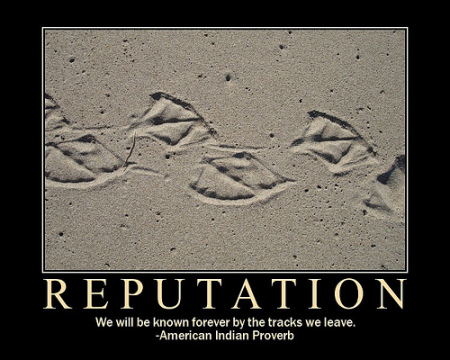
Give Your Employees a Fine Reputation To Live Up To: the manager worked with a longtime trusted employee, and resulting in decline of productivity. Never miss an opportunity to remind your managers about their quality contributions. You should build up the expected reputation of your managers. If you play up the importance of giving people a fine reputation to live up to, you will motivate them. So Warren has some advice for Bono: don’t appeal to the conscience of American on African aid. If you appeal to a sense of right or wrong, it will not work, because we do not want to feel guilty. Bono should speak to America’s sense of greatness. America put a man on the moon, we should turn to America to save Africa. If you give a person a fine reputation to live up to, it is more effective. Using guilt is not productive.

The Dangers of Criticism: using criticism is ineffective because it arouses resentment. Uninvited criticism is something we hate to hear. We should not provide uninvited criticism of others. Instead of critcizing managers, you need to pay attention to what went wrong, and learn from it. As long as managers are making intelligent risks. We all make mistakes, and that you should learn from your errors but not make such a mistake subsequently.

[This is a précis of Warren Buffett’s Management Secrets. More is forthcoming]