On Hong Kong, Israel, South Africa
Hong Kong was set to be returned to China in 1997. Thatcher accepted this but wanted to entrench strong democratic values and economic strength to influence China’s communist government into liberalizing elsewhere. She wanted to change China when Hong Kong became part of that country. Thatcher was open about her intentions. She wanted China to recognize the economic superiority of the Western market. The US was most responsible for the establishment of Israel. Thatcher believes that Britain was build on Judaeo-Christian values. Britain stays balanced between Palestine and Jewish influence on the Arab-Israeli conflict.
South African segregation was part of a tradition that Thatcher effectively supported. She did not want to abandon SA because of the racial violence occurring there. She felt the policy reflected the hierarchical values of that society. Brian Mulroney attempted to push for the exclusion of SA from the Common Wealth, Thatcher felt he was posturing. Thatcher didn’t want to give Mulroney her negotiating hand because concessions often get pocketed if revealed inappropriately.
According to Iacocca, if you have only financial analysts (bean counters) in your company then you tend to have a defensive, conservative and pessimistic organization. Sales and marketing people are more aggressive, speculative and optimistic; they are always pushing to go forward regardless of the macro-context of the company. A good company will have natural balance between the two. If the bean counters are too weak then the company will go bankrupt. Conversely, in the 1970s, Ford needed to have wild-eyed dreamers as the company was dying in the market place. Some so-called bean counters would cross the divide like Robert McNamara who helped develop the Falcon (one of the first compact cars selling over 417,00 units in the first year). Unfortunately, the Falcon was simply a vehicle to help people get from A to B, and it was not a major seller for long but it is worth mentioning as a case where someone crossed the divide between theses two groups. Robert McNamara was a true visionary and quoted a truth in 1967 to which many managers can agree that “Management is the gate through which social and economic and political change, indeed change in every direction, is diffused through society.”
This is a synopsis & analysis based on Iacocca: An Autobiography and other miscellaneous research sources. Enjoy.

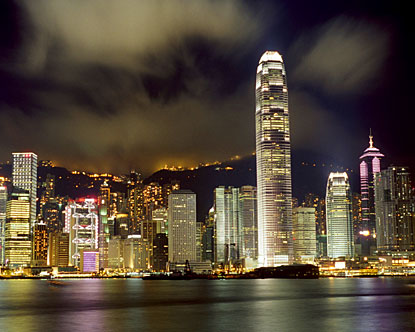 On Hong Kong, Israel, South Africa
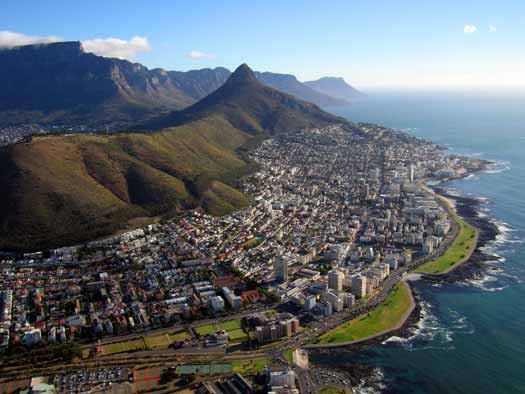 South African segregation was part of a tradition that Thatcher effectively supported. She did not want to abandon SA because of the racial violence occurring there. She felt the policy reflected the hierarchical values of that society. Brian Mulroney attempted to push for the exclusion of SA from the Common Wealth, Thatcher felt he was posturing. Thatcher didn’t want to give Mulroney her negotiating hand because concessions often get pocketed if revealed inappropriately.