Iacocca supported management by Quarter Reviews at Ford Motor Company. Accountability to themselves as employees is more important than accountability to the boss. The employee will know whether they are doing well or not, and can effectively marshal, fire or promote themselves. You don’t want to intervene too early as a boss and a quarterly review system is ideal for self-assessment and goal setting. Iacocca would ask three questions of his line managers: 1) What is your goal for the next 90 days?; 2) What are your aspirations, dreams?; 3) How are you going to get there?
This allows workers to set their own agenda; making them more productive and motivated and this helps the best ideas bubble to the top. Once there was an agreement in goals, goals would be written down and signed off on. For Lee, putting objectives down on paper forces you to get down to specifics. Understanding what you have achieved, what is to be accomplished next and how to go about it is crucial to self-accountability. The quarterly reviews also create a dialogue between the manager and his boss so that good workers do not get passed over and their working relationship usually improves through interaction. If someone is not appropriate for a given role then red flagging it sooner than later is always better for everyone. Iacocca is skeptical of moving people around from role to role however because specialization has to set in at some point.
This is a synopsis & analysis based on Iacocca: An Autobiography and other miscellaneous research sources. Enjoy.
According to Thatcher, the strategy to defeat communism was working. Its defeat would mean changes to Britain’s foreign relations and NATO’s defenses would arise. George Bush attempted to distance himself from Reagan by turning to Germany as his key ally in Europe. The welcome revolutions in Eastern Europe brought about the German Question. Thatcher’s fears of a unified Germany were mocked as Warmongering but were vindicated in 1990. The protectionism of Germany’s Europe which the US promoted was beginning to threaten American jobs. Thatcher visited Bush, Gorbachev about their INF disarmament deal. In Poland, Thatcher support the Solidarity movement which had successful overthrown the Jaruzelski government. She was highly respected as her views had won out once again. The US got Germany wrong, according to Thatcher. A united Europe would not hold Germany in check. Bush was hoping to move away from close ties in Europe, Thatcher felt that a unified Germany was a greater threat and should be dealt with accordingly. Eastern Europe fell from communism because the West stayed strong and resolute. Gorbachev renounced the Brezhnev doctrine. Czechoslovakia, Romania became democratic. The German problem was that reunification did not provide a balance of power in Europe. The true origin of German angst is the agony of self-knowledge. Many Germans want to locked into a federal Europe. But Germany is more likely to dominate in that framework than another. Britain and France can balance German power but in a European super-state this is not possible with a unified Germany. The Soviets wanted to denuclearize West Germany: this was achieved. The Soviet Union was completely crumbling under Gorbachev. Things moved rather fast. Thatcher was mainly concerned with Germany ultimately. Thatcher details the basics leading up to the Gulf War. Thatcher supports the UN but is hesitant at times because of her difficulties during the Falklands War. Thatcher was not allowed to see through the campaign because of the Conservative no confidence motion.
On the European CommunityRelations 1987 – 1990
Thatcher was beginning to see the harmful features of the European community in her second term. Thatcher feared the re-emergence of the Franco-German axis, inclinations towards bureaucratic solutions, and the EU’s ambition for power, a protectionist agenda and covert federalism. The German reunification made the Franco-German axis more lopsided: German dominance was certain. State interventionism in the Christian Democratic government disturbed Thatcher. She feared the corporatism of the EU. Thatcher was blamed for Brussels failures.
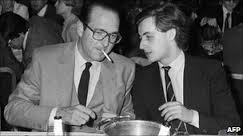
M. Chirac called Thatcher a ‘bitch’. Chirac had made the Gaullists a right-of-centre party committed to free enterprise. Chirac and Mitterrand were torn in France. Neither wanted to risk the agricultural vote as they vyied for the Presidency of France. The French election campaign put the rivalry in full swing. Thatcher noted that neither could be seen in the same room together. Mitterrand won the election and the disputes were over (1988); the EU could continue to function somewhat. They agreed on a 1.3% GNP for Community resources. Thatcher wanted effective and legally binding controls on expenditure, measures to reduce agricultural surpluses in which automatic price cuts were the principle weapon and make sure that Britain’s rebate, which had saved Britain 3 billion pounds in the past three years would be secure.
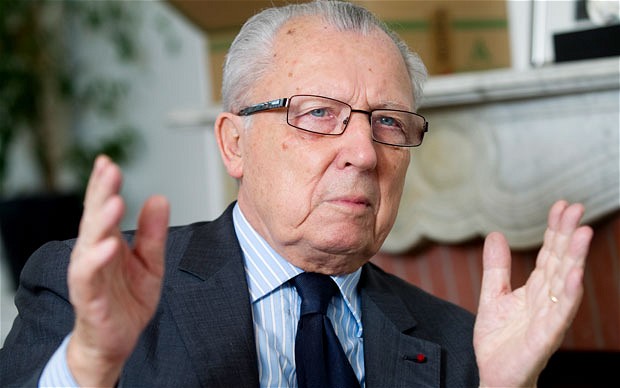
Thatcher was extremely sceptical about giving Brussels control over the British currency. The EMU (economic and monetary union), Central Bank and other centralizing tendencies in the EU were unsavoury to Thatcher. Then Thatcher gave her Bruges Speech. Thatcher’s speech clearly slowed the process of integration. She felt that Jacque Delor stopped being a functionary (bureaucrat) and became a political spokesman for federalism.
The blurring of these roles is common on the continent. Scepticism was high in Thatcher mind. She had to ask if the British democracy, parliamentary sovereignty, common law, our traditional sense of fairness, our ability to run our own affairs in our own way might be subordinated to the demands of a remote European bureaucracy, resting on very different traditions? Thatcher despised the European ideal. Thatcher found it ironic that despite the suffering of the Eastern European countries, West Germany etc insisted on centralization. Thatcher rejected the idea of a “European super-state exercising a new dominance for Brussels. Willing and active cooperation between independent sovereign states is the best way to build a successful European community. Thatcher warned of the EU replacing NATO. Thatcher believed in a family of nations not one homogenising nation. Thatcher highlights the negatives of EU members such as Germany, France and Greece (with its financial scandal).
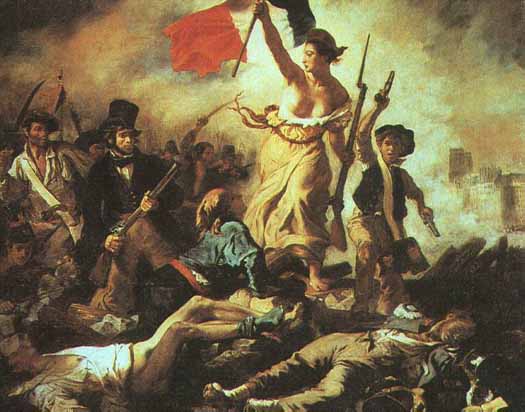
Thatcher claimed the French Revolution was not as revolutionary at the 1688 Revolution of England. Thatcher was set to attend the 200-year anniversary of the violent, horrible revolution, which led to Napoleonic rule and further suffering in Europe. Thatcher genuinely claimed that the French Revolution was nothing to celebrate really. Human rights were not developed by the French, she told a French newspaper. She also handed Mitterrand a copy of the A Tale of Two Cities because it explained her point most clearly.
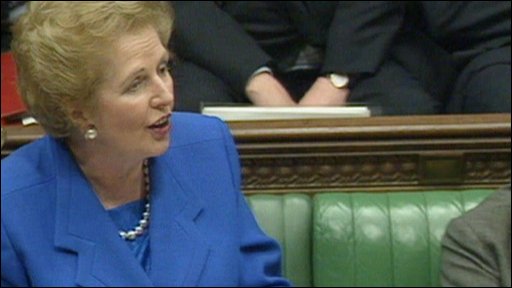
Thatcher explains the Franco-German axis as a rising serpent destined to destroy England. Thatcher emphasizes that political union is now envisaged alongside monetary union. Behind political union lies with the Franco-German axis. They envisage a stronger European Council with more majority voting: but they did not want to see the powers of the Commission or the European Parliament increased. The French were federalist on grounds of tactics rather than conviction. The Germans wanted political union for different reasons and by different means. For the Germans, the price of quick reunification with East Germany on their own terms and with all the benefits which would come through Community membership (Germany would not behave like Hitler’s or Bismarck’s Old Germany). Germans were federalists by conviction while the French were senior partners: Germany was dominant. Thatcher is opposed to political union of either kind. Political union in a European Parliament must not mean the reduction of the role of NATO. Thatcher rejected Delors view of a federal Europe in which the European Parliament would be the Community’s House of Representatives, the Commission its Executive, and the Council of Ministers its Senate. “No, no, no,’ said Thatcher in the House of Commons.
This publication is dedicated to finance, politics and history

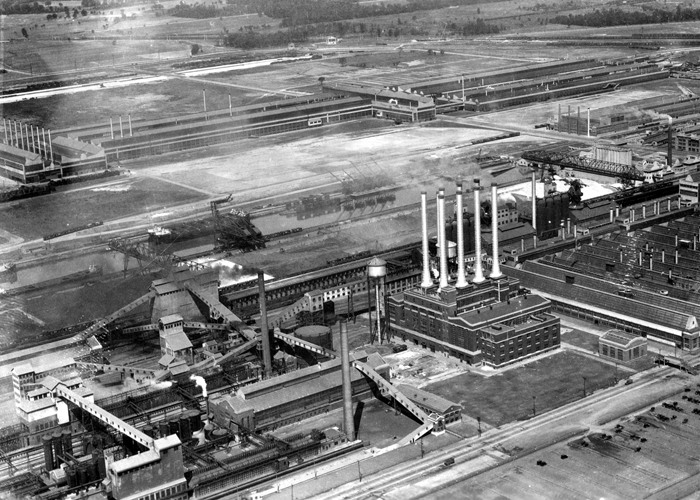
 Iacocca supported management by Quarter Reviews at Ford Motor Company. Accountability to themselves as employees is more important than accountability to the boss. The employee will know whether they are doing well or not, and can effectively marshal, fire or promote themselves. You don’t want to intervene too early as a boss and a quarterly review system is ideal for self-assessment and goal setting. Iacocca would ask three questions of his line managers: 1) What is your goal for the next 90 days?; 2) What are your aspirations, dreams?; 3) How are you going to get there?
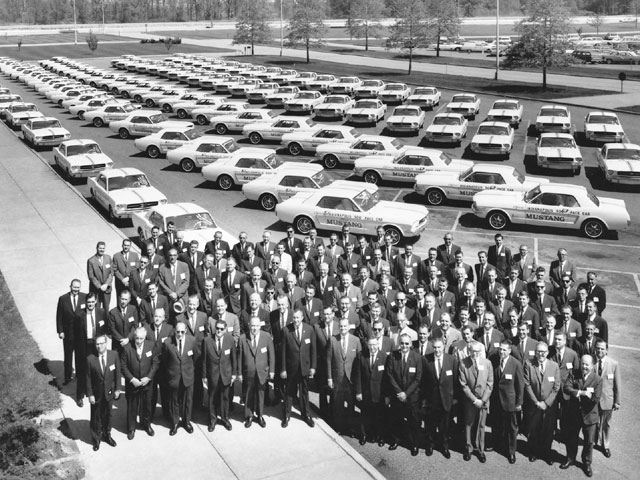 This allows workers to set their own agenda; making them more productive and motivated and this helps the best ideas bubble to the top. Once there was an agreement in goals, goals would be written down and signed off on. For Lee, putting objectives down on paper forces you to get down to specifics. Understanding what you have achieved, what is to be accomplished next and how to go about it is crucial to self-accountability. The quarterly reviews also create a dialogue between the manager and his boss so that good workers do not get passed over and their working relationship usually improves through interaction. If someone is not appropriate for a given role then red flagging it sooner than later is always better for everyone. Iacocca is skeptical of moving people around from role to role however because specialization has to set in at some point.