
This is an amusing video on usability in particular how to actually create usable interfaces for your MVP or service. Remember that the internet is an extension of our off-line experience because it is logical and easier for users to follow. It might be helpful to reduce the bounce rate to begin with. Check out their website here: https://www.squareweave.com.au/
Category Archives: Business
Lee Iacocca: Get Rid of Excess Inventory
 Before Iacocca, Chrysler production was a giant guessing game. Prior to Iacocca’s arrival, the way Chrysler worked was that the Manufacturing Division would tell the Sales Division the car models what quantities it was going to produce, then the Sales division would try to sell them. This is the complete opposite of what makes sense since the sales people should be managing the demand side based on customer interest. Basically, Chrysler was not responsive to customer demand, if a customer wanted a red car it was not going to be built unless the Manufacturing Division had allotted some production for red cars.
 This manufacturing organization meant that there was a sales bank of Chrysler cars. The extra cars that were not sold immediately were put on giant lots in Detroit at the Michigan State fairgrounds. In 1979, there were 80,000 models on display, which was worth approximately $600 million in finished inventory. The cost of this unsold inventory was immense because these assets were decaying. To fix this problem, Iacocca went to the dealers to pick up and reorganize demand side management. This was so that the dealers and salespeople could then come together to decide the next order for the following month + a 3 month projection of demand. A firm commitment from the dealers = a building schedule. The dealer makes an order and within a few weeks it is on location. Killing the sales bank was essential for efficiency.
 This is a synopsis & analysis based on Iacocca: An Autobiography and other miscellaneous research sources. Enjoy.
Andrew Carnegie’s Biography
Lee Iacocca: A Company Needs A System Of Financial Controls
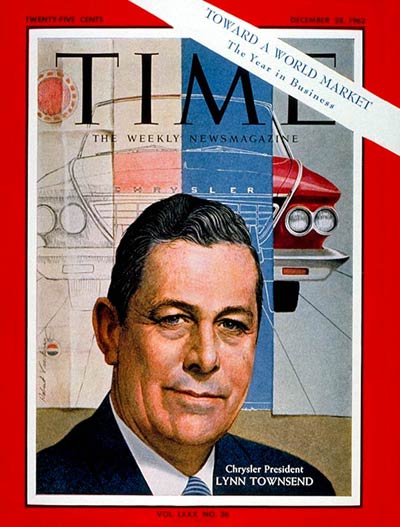 In late 1979, when Iacocca dived deeper into understanding Chrysler, he realized that nobody in the company fully understood what was going on in terms of finances and projections. Finding out the return on investment for each plant was rather difficult because no one took responsibility at Chrysler. Lynn Townsend ran Chrysler and according to Iacocca, he focused on oversea expansion (to enhance the companies valuation) rather than quality vehicles at home. Townsend aggressively expanded in Europe and in the process made himself very wealthy but Iacocca maintains that Townsend did not understand the fundamentals of the car business. That was because Townsend was a banker. So much so that Chrysler was running a marginal or losing operation around the world.