Tag Archives: Robert Caro

Power Broker by Robert Caro – Summary & Analysis of Part 3 – Chapter 6

PART 3 – The Rise to Power

Chapter 6 – Curriculum Changes

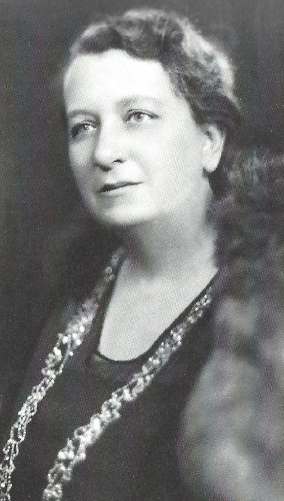
Belle Moskowitz, Mrs. M to her admirers or Mosky to her detractors, as advisor to Mayor Al Smith became one of the most powerful political voices in New York. She was not so powerful when she phoned Robert Moses. Reformers regarded Belle as one of their inner circle. She was a powerful voice supporting young working women and her recommendations for regulations to govern working conditions were accepted.

In her phone call, she told Moses that Governor Smith had decided to set up a commission to implement vast public service and infrastructure changes to the City of New York, and that Governor Smith was looking for a Chief of Staff. Would Dr. Moses be interested in the job? Moses said he would. On Belle’s recommendation, Moses got the position. Moses had his own office, at last, at the Hall of Records.

The election of 1918 was the first in which women were involved. Belle’s influence with the Governor came mainly from the advice she gave him about how to win over this new electorate. Smith was an underdog in this election and Smith began to rely more and more on Belle’s advice. Belle persuaded Smith to reform the state’s administrative machinery, even in the face of the Governor’s Tammany supporting backers, by forming a Commission that included in its title “Retrenchment” which appealed to native Tammany conservatism and served to split the Republican vote.

The existing administrative machinery was in a corrupt mess, with budgets and strategy run not by the governor but by the heads of many committees and the legislature, all serving their individual interests. The bureau argued that power, as well as responsibility should be in the hands of the Governor and his representatives with the legislature reduced to a reviewing role.

When Moses began his work as Chief of Staff, it was Belle who taught him how to get things done. She taught him the statecraft of dealing with the various factions, the art of the possible. There was no doubt that she was the boss, but Moses, despite his exasperation with some of her decisions, was learning fast. By the spring of 1919, the Commission was almost entirely in Moses’s hands.

Smith, emboldened by his success with the more progressive elements, persuaded to members of the Commission to raise a budget themselves. Once they had done this, Smith supported the Commission fully. Moses was an inspiring leader because of his frankness and hard work as well as his devotion to the public interest.

The Commission began running out of money and the staff had to be let go. Moses finished the report himself. Its success was based on its clarion call and its clarity. Although the Governor held the powers, he was answerable to the electors and an independent watchdog. This democratic element won all sides over. However, other contributors, including the original work of the Bureau, were not mentioned. Moses claimed full credit. The report was published in October 1919. Al Smith agreed to fight for its implementation.

Moses directed the project to build support for Smith’s position, tempered by Belle Moskowitz’s advice. Moses took charge of answering all questions regarding the report. He was confidant of passing the necessary bills during the Governor’s next term. However, Governor Smith lost the next election and the Commission was disbanded.

By 1922, Moses was working for the New York State Association. He continued to talk with Al Smith who was now working for a transport company. He continued to tell Smith about his plans and dreams, and Al Smith listened.

Analysis & Key Takeaways
  • State-Crafts and Politics involve appealing to desperate clusters of voters without the other clusters realizing you are talking to people other than yourself. Splitting the retrenchment conservative voters;
  • Devotion to the public interest is a central theme for Moses: however, it is also a good cover for all kinds of prejudiced decision-making Naturally, we gravitate to the most egregious examples: because hey are easy to remember; but he will always have the defense that he was acting in the public interest. How do you measure what the public interest is? In a Venn diagram, Moses’ self-interest appears to be significantly tied to the public interest;
  • Moses seems to have taken full credit for the report since he was the last man standing ad still working on it;
  • Fait Accompli strategy is to start a project that cannot be fully paid for due to the agreed budget but then embarrass the government into paying for the remaining.
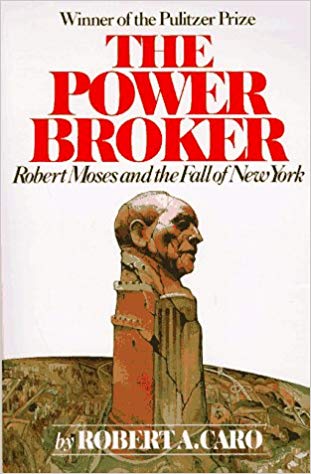
The Power Broker is a Pulitzer Prize Winner
Chapter 1Chapter 2Chapter 3
Chapter 4Chapter 5Chapter 6
Chapter 7Chapter 8Chapter 9
Chapter 10Chapter 11Chapter 12
Chapter 13Chapter 14Chapter 15
Chapter 16Chapter 17Chapter 18
Chapter 19Chapter 20Chapter 21
Chapter 22Chapter 23Chapter 24
Chapter 25Chapter 26Chapter 27
Chapter 28Chapter 29Chapter 30
Chapter 31Chapter 32Chapter 33
Chapter 35Chapter 36Chapter 37
Chapter 38Chapter 39Chapter 40
Chapter 41Chapter 42Chapter 43
Chapter 44Chapter 45Chapter 46
Chapter 47Chapter 48Chapter 49
Chapter 50

Power Broker by Robert Caro – Summary & Analysis for Chapter 5

Chapter 5 – Age of Optimism

Moses’s first task was to challenge the dominance for Tammany Hall, and for that he had to control the city’s jobs – 50,000 City employees. Patronage was the lever of power in New York City, and by taking control of this lever, Moses sought to gain the power he needed to change the city.

Tammany resisted changes to the Civil service. Employment was currently managed by patronage and bribery and a maze of technicalities had been historically put in place to prevent change. The Mayor turned to Moses to handle these technicalities.  However, Moses’s thesis was published, and his support of only educated gentlemen for positions in the Civil Service caused a scandal, and the offer was withdrawn.

Moses continued at the Bureau with more assistants. Moses’s first step was the measure of efficiency ratings for employees. In order to do this, each role had to be broken down into measurable parts. By 1915, Moses was ready to write his efficiency report. He was given a desk in the Municipal Building, his first foot in the City Hall door.

Robert married Mary in 1915 with a child in 1916. Although Moses’s mother pushed him to take a salary, Moses did not seem interested in money. He was more driven by his ideas for change and attaining the power to make them real.

Moses wrote that pay grades should be consistent across departments. The Civil Service should be structured into sixteen categories and promotion should be given purely on documented, mathematically verifiable merit. Moses was accused of downplaying the human element in this calculation but Moses had an almost religious belief in his mathematical models.

The first reactions to Moses’s ideas were positive. Mitchell announced that he would push for adoption. However, Tammany Hall was girding itself for a fight. Many of New York’s municipal employees would lose money due to Moses’s changes. At meetings, Moses would suffer a hail of abuse as he outlined his plans. Some of his supporters began to have doubts, especially those whose salary would be reduced. At the height of these doubts, Tammany Hall held a commission to consider the proposals. The decision was to modify the proposal, to consider individual cases and to slow down implementation. Different Civil Service levels were added by the City Alderman. By these methods, Tammany Hall successfully delayed the reforms.

Moses’s loss of optimism was mirrored by the country’s anxiety as it moved towards war. Mayor Mitchell popularity was also waning, not only with the public but with Moses as well as Mitchell had turned down Moses’s plans for Riverside Drive.

In 1917 Moses redoubled his efforts to push through his changes. Mitchell was up for re-election and was being contested heavily by Tammany Hall and their candidate, “Red” Mike Hyland, won. Progressivism was dead, as were Moses’s reforms.  Science and logic were not enough. Moses needed power.

In 1918, Moses was looking for a job. He tried the shipbuilding industry, where he again proposed reforms which were rejected. He had to go back to the Bureau for a job with a diminished status.

His second daughter was born. Money was short and debts were rising. The apartment was too small and a larger one was out of the question. The war was over. Woodrow Wilson was fading. Tammany’s Mayor Al Smith was in charge in New York. Moses’s contacts were gone. He seemed to have nowhere to go. And then he received a phone call from Belle Moskowitz, Al Smith’s political advisor.

Analysis & Key Takeaways:
  • Robert Moses was not motivated by money for the most part to Caro. This notion ends up being critical for evaluating what kind of lust for power, questionable ethics, vindictiveness and racism is exhibited by Moses’ practices.
  • Money is an approximation of value for Moses; People who are motivated by material value (goods, money) are doomed to chase short-cuts to get more money (easy to see corruption). People who are motivated by abstract goods are more likely to achieve great amounts of influence through hard work (of course); so having cheap tastes and be impactful will ward off claims of corruption even if you’re value are to undermine the prospects of the poor to advance the interests of the wealthy as Caro makes clear in this book;
  • Another example of the power of networks: Tammany Hall seems to have relied on a cultural group, Irish Catholics, to power a political block that gained disproportionate influence on the general public. These networks of influence aren’t explicit but show the underlying structure to be game-able by interest groups that aren’t explicit. As long as decisions are being made to advance the interest of the public, then there is no problem, right?
  • Measuring the efficiency of employees is very subjective and yet also necessary: you do not want to be making hiring and firing decisions based on a gut feeling; you also do not want to be ‘building a case’ for people you just don’t like. Instead, you ought to try to establish key performance indicators so that the employee and the manager can determine whether they are heading in the right direction or if there is not a good fit; the data collected needs to be independent of any single person otherwise it is all about relationships which is the world that Robert Moses thrived in.
The Power Broker is a Pulitzer Prize Winner
Chapter 1Chapter 2Chapter 3
Chapter 4Chapter 5Chapter 6
Chapter 7Chapter 8Chapter 9
Chapter 10Chapter 11Chapter 12
Chapter 13Chapter 14Chapter 15
Chapter 16Chapter 17Chapter 18
Chapter 19Chapter 20Chapter 21
Chapter 22Chapter 23Chapter 24
Chapter 25Chapter 26Chapter 27
Chapter 28Chapter 29Chapter 30
Chapter 31Chapter 32Chapter 33
Chapter 35Chapter 36Chapter 37
Chapter 38Chapter 39Chapter 40
Chapter 41Chapter 42Chapter 43
Chapter 44Chapter 45Chapter 46
Chapter 47Chapter 48Chapter 49
Chapter 50

Power Broker by Robert Caro – Summary & Analysis of Part 2 – Chapter 4

PART TWO – THE REFORMER

Chapter 4 – Burning

Moses entered public service at the same time as the Progressive Movement had gained momentum, a desire to tackle the challenges of poverty and the new industrial order. Moses supported this movement by attempting to make American public service organisations more meritocratic. American institutions had no historical frameworks like Europe. Moses saw them as inefficient and corrupt. The Bureau of Municipal Research would be at the forefront of Progressivism in New York, whose drive was to improve government processes and operations in terms of efficiency as well as developing budgetary systems to support development by disseminating facts about how governments actually ran.

The findings of the bureau conflicted with Tammany Hall, the powerful New York Irish/Catholic political organisation that had run New York for decades. The Bureau developed new techniques to improve local government, including a budgetary system, allowing voters to be able to judge the performance of their local governors. This led to anti-Tammany, Reformer candidates to be elected to office.

After some time at the training school of the Bureau, Moses became impatient with the leg-work and report writing. He applied to join the Bureau, agreeing to do so without salary, and he was admitted. He began to make visits to the wasteland of Riverside Drive in the Bronx and walk through the nearby park a stagnant ex-landfill pervaded by the stench of trains going towards the abattoir. Here he dreamed of renewal, of a great highway along the waterfront and deal with the on-going problems of the ugly train tracks. His burning ideas of city improvements began to grow from this point. Now he needed to put them into practice.

Moses became critical of the Bureau for their lack of action.

Mary-Louise Simms was the only one to be sympathetic. Previously working for the Governor of Wisconsin, she had an instinct for politics and what it could do. Mary came to New York to work for the Bureau. Moses fell in love with her.

In 1914 John Mitchell became Mayor. When he looked to appoint a new Civil Service Commissioner, Moses was the favoured candidate.

Analysis & Key Takeaways:
  • A lot of things that are obvious for improving the machinery of government have already been contemplated by bureaucrats in the early 20th century. For example, rubrics for evaluating work, key performance indicators basically metrics for management which are routinely thwarted by human nature, self-reporting and the problem of data capture;
  • Government data/knowledge is a currency in the civil service. Understanding how an organization works is rarely written down. In order to reduce corruption of civil servants, that currency needs to be devalued by making it radically transparent within the civil service and by making the system more accessible to the public. That is with the caveat that the public can see the interconnection of cause and effect. One of the side-effects is that if the public has more information, you’ll need a filter in order to evaluate incoming criticism from the public who may not fully understand the (holistic) system of levers and responsibilities and balancing that goes on in government;
  • Another challenge with making data/knowledge more transparent is that a lot of data/knowledge is trapped in the minds of the civil servants themselves; and they don’t have time and zero inclination to write things down or even divulge their knowledge in any communicable format since….again, data/knowledge is a currency in the civil service;
The Power Broker is a Pulitzer Prize Winner
Chapter 1Chapter 2Chapter 3
Chapter 4Chapter 5Chapter 6
Chapter 7Chapter 8Chapter 9
Chapter 10Chapter 11Chapter 12
Chapter 13Chapter 14Chapter 15
Chapter 16Chapter 17Chapter 18
Chapter 19Chapter 20Chapter 21
Chapter 22Chapter 23Chapter 24
Chapter 25Chapter 26Chapter 27
Chapter 28Chapter 29Chapter 30
Chapter 31Chapter 32Chapter 33
Chapter 35Chapter 36Chapter 37
Chapter 38Chapter 39Chapter 40
Chapter 41Chapter 42Chapter 43
Chapter 44Chapter 45Chapter 46
Chapter 47Chapter 48Chapter 49
Chapter 50

Power broker by Robert Caro – Summary & Analysis of Chapter 25

PART 5 – The Love of Power

Chapter 25 – Changing

Moses’s need for power was strong and it was growing. He seemed to take pleasure in antagonising people who disagreed with his plans. He also started to act badly towards people who were nothing to do with his work. Sometimes because they were unable to fight back. An element of sadism seemed to have entered Moses’s character. He started to have physical encounters with people he knew could not fight back. He wasn’t content with ignoring opponents but was intent on destroying them.

A streak of maliciousness was becoming apparent as well. He ousted the members of the Columbia Yacht club from their clubhouse on a potential park site before they had time to consult with their members, merely because they asked for a few months delay to move their belongings. A judge agreed with the delay, but work went ahead. The clubhouse’s electricity was shut off. Then its water. By the time the injunction was put in force, trenches had been dug denying access. The clubhouse was then demolished even though the plans were not finalized for the park.

Moses’s methods were successful in that they intimidated people, allowing him to press on with his plans. He continued to create great works by creating new land and planting trees and flowers. His monuments were everywhere. The public cheered rather than moralized. The press were right back on side. His playground schemes were judged an unqualified success even though most of the playgrounds were placed in areas that needed them least. There were few in areas that needed them most, especially those containing black communities like Harlem, despite the evidence that the lack of well-run playgrounds was resulting in children wandering the streets and becoming involved in crime. Appeals were made directly to La Guardia but he was unwilling to cross swords with Moses.

Moses paid more attention to his expensive swimming pools. The success of these became a smokescreen to the failures of the playground program. His distaste for the black community was also evident here. Only white lifeguards and attendants were employed. At swimming pools in black neighbourhood, the water was kept significantly colder because Moses thought that this would deter blacks.

New parkways to were opened in 1936, but the traffic congestion returned in under three weeks. Moses’s solution was to build even newer parkways. The Triborough Bridge was also opened this year, to adulation from the public and the press. Soon after the opening New York City experienced one of its worst ever traffic jams. Again, Moses’s solution was to build more parkways. Again, the press agreed. But traffic growth was heading far ahead of estimates. It started to become clear that building more bridges and parkways increased the use of cars and this, along with the rise in car ownership, was the cause of the problem. There were calls to increase rail traffic to take the pressure off of the roads. However, Moses built the new $70 M Whitestone Bridge. It soon became jammed as well. Moses opened new city highways in 1939 and 1941. They filled up as quickly as the others.

Worst of all, Moses tore down the lively Third Avenue neighbourhood to make way for a ten-line highway which plunged Third Avenue itself into noisy darkness. Half the stores, restaurants and theatres were gone. Once it was a place for people, now it was a place for trucks and cars. The side streets, once the playground for children, were now too dangerous to play in. Third Avenue became a paradise for gangs, drunks and drug addicts, full of abandoned shells of cars, mattresses and rats.

Moses then turned his attention to his original dream, the Riverside Parkway heading north out of the city. The job had started in 1929 and over $100M had already been spent before being abandoned at the start of the Depression. Moses required $109M more. Moses found that the railroad owed the city $13M. This would provide Moses with a start. Moses needed to find a source of funds that the railroad could use to pay off the debt. He found this in funds available to build in the Grade Elimination Fund, set up to build bridges over railroads. Governor Lehman was persuaded to sign off the loan by promising that he would get the credit for the improvements. Moses got his money, but he needed $86M more. Moses scoured around for new funds to use and adapted his designs to qualify for them. The overall plans were labelled as Grade Elimination Plans to qualify for federal funding.

Although the fundraising was progressing, economies had to be made. This was made by drastically reducing the quality of work as it ran through poor areas as well as changing the route of the parkway to run straight through parkland. By these changes to the plan and strenuous fundraising, Moses need only $10M to complete his dream. He thought that this last pot of money would be the easiest to obtain, but it became the hardest. He attempted to interest Wall Street in a $10M bond issue, but the bankers would only release $3M. Moses worked to reduce the cost. As the PWA was to receive a new dispensation, he was able to get some funds from there, but he still had a significant shortfall. Then one of his engineers had a brainwave. They could build a smaller bridge, reduce the number of lanes, then strengthen and expand it when more fund became available. With this last economy, the funding for Moses’s dream was complete.

However, having the new parkway cut straight through a park – a park that was a considered one of the last great conservation areas of the city – created opposition. On top of this it was discovered that the original route was cheaper and would cause far less damage to the parks and connected waterfront. Moses refused to listen and pre-emptively began cutting down trees. Approval for Moses’s plan was given and by 1937 his dream was complete, but at a cost, during the Depression, of around two hundred million, skilfully hidden dollars and little of benefit to the poor and black neighbourhoods. As for the traffic congestion, this would continue to worsen. Despite these reservations, Moses’s reputation was at its zenith.

Analysis & Key Takeaways
  • Mary did his finances…
  • Moses was interested in grand design: not listening to the public. He was a kind of a Steve Jobs-type.
The Power Broker is a Pulitzer Prize Winner
Chapter 1Chapter 2Chapter 3
Chapter 4Chapter 5Chapter 6
Chapter 7Chapter 8Chapter 9
Chapter 10Chapter 11Chapter 12
Chapter 13Chapter 14Chapter 15
Chapter 16Chapter 17Chapter 18
Chapter 19Chapter 20Chapter 21
Chapter 22Chapter 23Chapter 24
Chapter 25Chapter 26Chapter 27
Chapter 28Chapter 29Chapter 30
Chapter 31Chapter 32Chapter 33
Chapter 35Chapter 36Chapter 37
Chapter 38Chapter 39Chapter 40
Chapter 41Chapter 42Chapter 43
Chapter 44Chapter 45Chapter 46
Chapter 47Chapter 48Chapter 49
Chapter 50