Category Archives: Politics

Power Broker by Robert Caro – Summary & Analsysi of Chapter 49

Chapter 49 – The Last Stand

Rockefeller’s transportation plans were now ready. The plan would cost $6.5 billion over five years. The only source of funds was the Port and Triborough Authorities. Now it was time to get rid of Moses. Moses had little to fight back with. The network of power structures he used to control had now almost disappeared. Now Triborough stood alone. If it was removed from Moses’s control, Moses would be gone. Moses’s power over Triborough rested on the bond covenants. A bond holder needed to sue Moses. But a single bond holder would not be able to do it by themselves. So, Rockefeller created a bond holder’s trustee. That trustee was the Chase Manhattan Bank, and that bank was owned by the Rockefeller family.
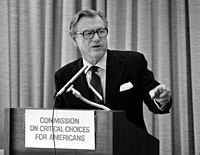
By 1967, Rockefeller sought approval to issue bonds to raise money for the transportation plans. He had support in the press and the legislature, but support from a public referendum was unsure. The unions were also unconvinced, and Moses was dead against. Moses calculated that claimed surpluses from the plans were in fact deficits that would be picked up by the taxpayer. The public would, according to Moses, be left with a staggering debt. If Moses went to the media, he would be able to wreck the bill. The Governor tried to mollify Moses. Rockefeller met with Moses and after the meeting Moses declared himself in favour of the plan. The Governor had paid for this support with a promise of power. To maintain Moses’s support, Rockefeller had offered Moses a role in the construction. Moses tapped Triborough funds to support the campaign for the bill.

Prior to the meeting with Rockefeller, Moses was preparing to fight the suit brought by the bond holders. After the meeting, Moses lost interest in the suit, even though he was backed by the law and would probably have won. A deal between the Governor and the Chase Manhattan Bank, between one Rockefeller and another, agreed the merger of transport bodies into a centralised authority.

Rockefeller continued to keep Moses on-board, promising a role in the new authority, but a promise was all it was. If there was no contract by March 1st, 1968, there would be no job. Now, having strung Moses along for so long, Rockefeller let Moses go. Moses was offered a post as consultant to the Triborough Authority. This was not a board post, in fact, the post had no authority at all. Moses would be reporting to somebody else and he had no option but to accept it. Moses was now powerless and muted. The age of Moses was over.

Analysis & Key Takeaways
  • Operating the government, the politicians like Robert Moses because he produced project that politicians could champion;
  • He took advantage of New Deal funding to building pools, parks and beaches;
  • Over his 44 year career, Moses always built projects that ensured that he would have even more power, the bridges with tolls for example, with their bond raising capacity;
  • There were no environmental review processes, there is no bullying allowed to the same extent…
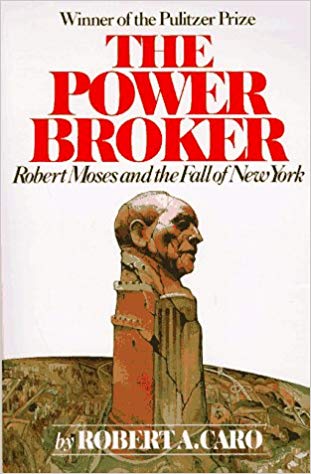
The Power Broker is a Pulitzer Prize Winner
Chapter 1Chapter 2Chapter 3
Chapter 4Chapter 5Chapter 6
Chapter 7Chapter 8Chapter 9
Chapter 10Chapter 11Chapter 12
Chapter 13Chapter 14Chapter 15
Chapter 16Chapter 17Chapter 18
Chapter 19Chapter 20Chapter 21
Chapter 22Chapter 23Chapter 24
Chapter 25Chapter 26Chapter 27
Chapter 28Chapter 29Chapter 30
Chapter 31Chapter 32Chapter 33
Chapter 35Chapter 36Chapter 37
Chapter 38Chapter 39Chapter 40
Chapter 41Chapter 42Chapter 43
Chapter 44Chapter 45Chapter 46
Chapter 47Chapter 48Chapter 49
Chapter 50

Power Broker by Robert Caro – Summary & Analysis of Chapter 50

Chapter 50 – Old

Moses’s mind was still active, but he had nothing to do. The months ahead drew bleak and terrible. The effect of powerlessness became apparent. The eyes became rheumy, the figure emaciated. A discouraged sigh would be emitted constantly. Moses still sat at his desk at Triborough, but no advice was sought. Soon his former aides were avoiding his office. Eventually, the reality of the situation became clear to Moses; he was being left to die.

Moses was reduced to pleading for a meaningful position. His old cronies tried to fight for him, knowing that their wealth was dependent on Moses having a say in development. Eventually however, everybody realised that Moses had lost all his power. Moses would continue to expound on his past successes, but now people would grow bored and leave. He was now quite deaf and his eyesight was failing. He was still a big man in presence, but the loss of power had a telling psychological effect; he was no longer intimidating.

His intelligence was still active and he still wrote about city planning. He had a city-wide housing program worked out, but the previous flaws were still obvious and now many commentators felt free to criticise them. His desire was to continue to build to save his reputation but the priorities had changed and his plans were ignored. His impotence turned into bitter frustration and violent rages. He could not sit still. He was always anxious to get back and could not get any solace.

There were bright spots. There were monuments and developments named after him. He was named “Man of the Year” in the early 70s by various organisations. He had continued support in some sections of the press. These bright spots however, became fewer and fewer. His name, once a symbol of progress, became a symbol of failure. He no longer had no public platform to express his views. He was asked to host a TV program. The program was a fiasco, partly due to the refusal to wear a hearing aid, resulting in the situation that he was unable to hear anything the other contributors were saying.

By 1972. All of Moses’s contacts were either dead or retired. Once he led battalions, now he had only his chauffeurs and secretaries. His name had disappeared from the press. Moses’s career was over.

Analysis & Key Takeaways
  • Value of getting things done over wielding power to extract money or engage in corrupt acts: Moses was a cut above the both rich, arrogant and corrupt because he always fought opponents with joy and with the aim of expressing the ‘public interest’. He was consistently not held accountable by the electorate (for possible racism, prejudice, relocating the poorest in the name of engineering considerations i.e. the rich etc etc) becoming in effect the most powerful man in New York state for many decades. It was the fact that he was not elected, as a civil servant, he had the goal of wielding power in what he felt was unbiased. He did not value money or corruption through power. He valued the ability to get things done. And so he was closely aligned with the economic modernization of the New York infrastructure of the 20th century.
  • And so he could get away with allocating power in what was in fact a very biased manner which he personally may not have realized was biased; and we cannot confirm every decision was close to objective because we don’t and never will have the data to show just how subjective he was relative to others.
  • Moses tried to argue that the civilian roads were necessary to evacuate New York. He argued every case in order to gain more power. A totalitarian regime can have the will of a single architect the way a democracy cannot. People in a democracy do not sign on to having their own homes demolished for the greater good very often. This is the inherent frailty of democracy as a rather vague construct that doesn’t really exist in a serious way, because it is inimical to progress. Certainly Moses was at the heart of a totalitarian style and many politicians did not seem to mind that.  Proof that democracy dies in darkness. Democracy must do better to counter-act the evidence that Moses “got things done” by also being as or more productive while also accommodating the interests and perspectives of a wider audience (the democratic advantage being crowd-sourced preferences).
The Power Broker is a Pulitzer Prize Winner
Chapter 1Chapter 2Chapter 3
Chapter 4Chapter 5Chapter 6
Chapter 7Chapter 8Chapter 9
Chapter 10Chapter 11Chapter 12
Chapter 13Chapter 14Chapter 15
Chapter 16Chapter 17Chapter 18
Chapter 19Chapter 20Chapter 21
Chapter 22Chapter 23Chapter 24
Chapter 25Chapter 26Chapter 27
Chapter 28Chapter 29Chapter 30
Chapter 31Chapter 32Chapter 33
Chapter 35Chapter 36Chapter 37
Chapter 38Chapter 39Chapter 40
Chapter 41Chapter 42Chapter 43
Chapter 44Chapter 45Chapter 46
Chapter 47Chapter 48Chapter 49
Chapter 50

Power Broker by Robert Caro – Summary & Analysis of Chapter 35

Chapter 35 – RM

Age had not slaked the appetite of Moses for work and power. Every morning a vanilla envelope would be ready to be picked up, bursting with Moses’s orders. He was still working long hours, many of them in his Cadillac cum office. Nothing seemed to deflect him.  His impatience was legendary. He would pace his office like a caged tiger and his treatment of anybody who displeased him was brutal.

His physical strength was awesome. He would swim daily, often for hours. He wrote a full-length novel at the same time as running eight departments. Work seemed to make him stronger. This work made him a lot of money, but he spent this money in an attempt to make more by buying influence. His bank account was often nearly empty.

He did however, divert enough Triborough funds to entertain on an epic scale. He had a number of dining rooms, fifty feet long, at a number of his properties. He entertained around one hundred and fifty times a year, with guests numbering between ten and fifty diners. All of the guests were people Moses needed something from.

As for his employees, all were on tenterhooks in case Moses needed their services. His aides referred to him almost as if he were a god. They nodded when he wanted them to nod. They laughed when he wanted them to laugh. They acted as functionaries for his many banquets and entertainments for clients, including lavish shows at the Long Beach Stadium.

For opening ceremonies for large projects, the feast provided, both of food and entertainment, were of a scale rarely seen in a democracy. Attendees were often in the thousands, including Moses’s own court, often flown out of town in a specially chartered plane if it was required. Moses used his hospitality as a subtle reward for services rendered.

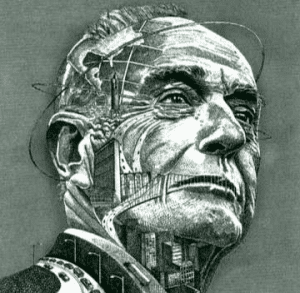
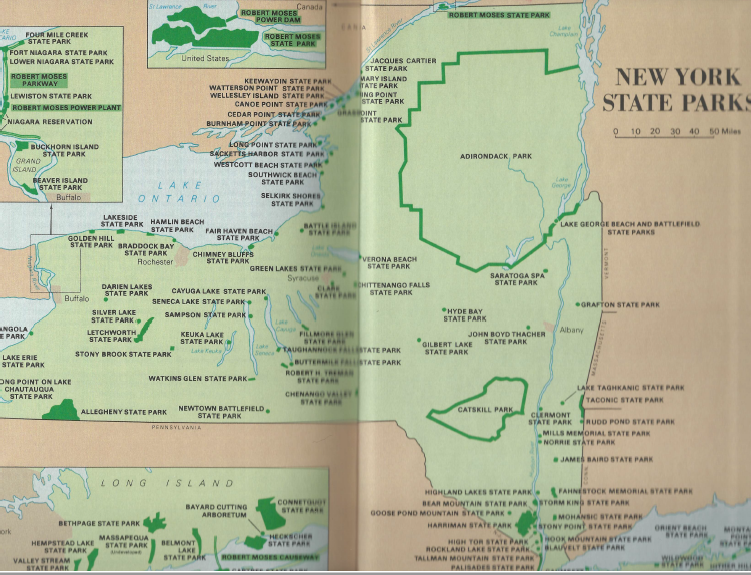
Robert Moses held shaping power in New York for forty-four years. He changed the course of rivers. He reshaped the hills surrounding the city and the beaches. He created the parks and parkways. He altered the region’s skylines with his civic buildings and apartment houses.

Robert Moses believed his works would make his name immortal. Barring catastrophe, the works of Robert Moses will be part of New York for centuries to come.

But as well as being an elemental force, he was a blind force. His arrogance, gorged with power, became absolute. As he was above rules, he was above the law. His ego became as titanic as his imagination. His detractors compared him to Hitler. His supporters compared him to Lincoln. His most frequent pose was one of lofty indifference, his arms crossed with hands gripping the opposite bicep, his head tilted back, like an emperor surveying all his works. He surrounded himself with sycophants, the only opinions sought being confirmations of his own opinion.

Three aspects helped to sustain his myopia. Robert Moses had never driven a car, even though his mobile office was in one. His work however was devoted to highways and transportation. These plans had no basis in a lived reality. His work ethic forced him to create projects, not always for the benefit of the city, but to fuel his desire for work and power. And Robert Moses was going deaf. This deafness was partly symbolic, an inability to listen to anybody else. However later that deafness became a physical disability. Then, he couldn’t listen even if he wanted to.

Analysis & Key Takeaways
  • Moses was a highly social animal. He would entertain guests 150 times per year;
  • He pushed for projects because he enjoyed it, the project would strengthen his power rather than the city needed it.
The Power Broker is a Pulitzer Prize Winner
Chapter 1Chapter 2Chapter 3
Chapter 4Chapter 5Chapter 6
Chapter 7Chapter 8Chapter 9
Chapter 10Chapter 11Chapter 12
Chapter 13Chapter 14Chapter 15
Chapter 16Chapter 17Chapter 18
Chapter 19Chapter 20Chapter 21
Chapter 22Chapter 23Chapter 24
Chapter 25Chapter 26Chapter 27
Chapter 28Chapter 29Chapter 30
Chapter 31Chapter 32Chapter 33
Chapter 35Chapter 36Chapter 37
Chapter 38Chapter 39Chapter 40
Chapter 41Chapter 42Chapter 43
Chapter 44Chapter 45Chapter 46
Chapter 47Chapter 48Chapter 49
Chapter 50

Power Broker by Robert Caro – Summary & Analysis of Chapter 36

Chapter 36 – The Meat Axe

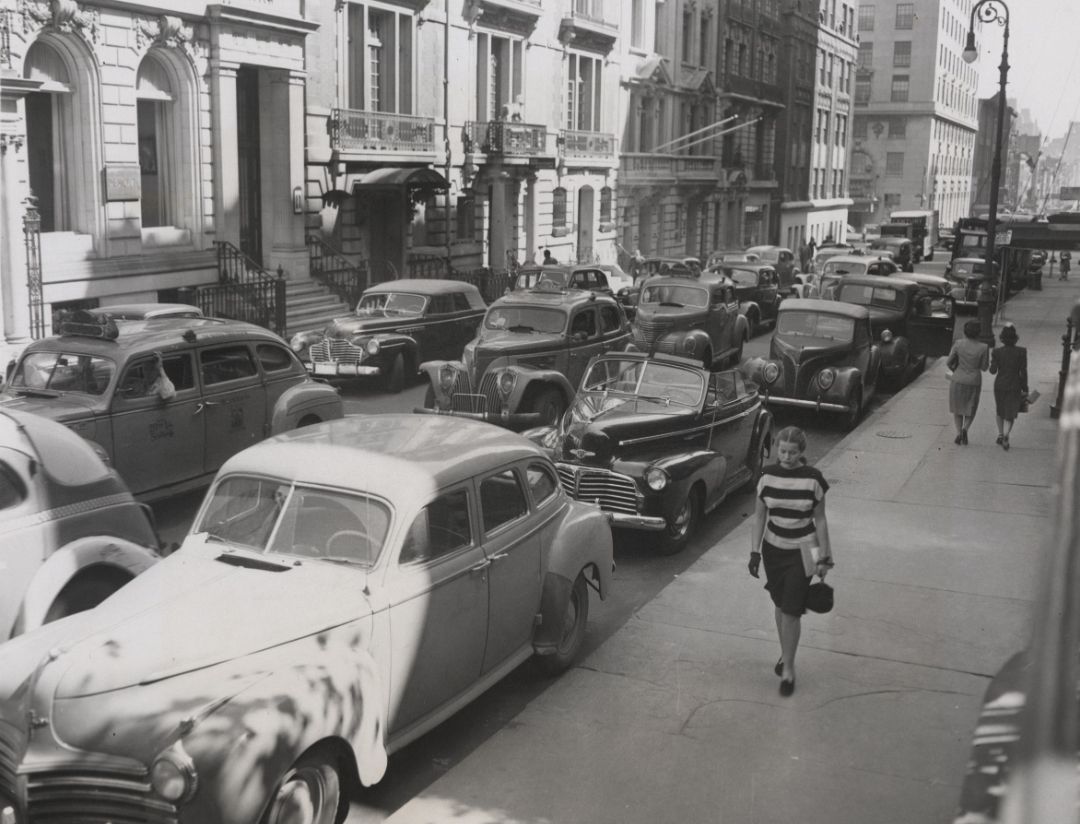
The history of road building and urban development through the ages has been one of immense constructions through relatively unpopulated areas, such as the Silk Road bringing goods from the Far East to Europe. But the developments carried out by Moses could only be compared to the reconstruction of Paris carried out by Baron Haussman, in that they were constructed in a heavily populated urban environment. This involved not only a substantial engineering effort, but the management of multiple disruptions in a busy city. In order to construct the new highways which criss-crossed the city, Moses’s engineers had to hack their way through whole communities. In terms of size, Moses’s development was comparable to anything in history. In terms of complexity, it would dwarf them all.

As impressive as the engineering feats were, Moses’s ability to raise the funds for these developments were equally impressive. To Moses, wars were mere inconveniences. Even during the height of the Second World War, Moses was still able to obtain the necessary funds and materials.

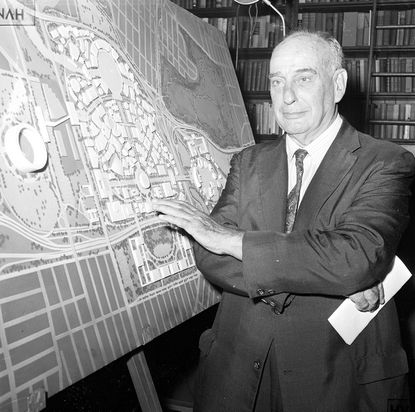
Moses manipulated the city like a player moving buildings around on a Monopoly board. He was never happier than when he was developing plans that would totally transform communities as if they were blocks on a child’s game. This also involved complex political manoeuvring. It took the mind of a dictator to carry out these plans, when the persuasion of a specific mind is sufficient. In a democracy, the scale of the public works carried out by Moses was unprecedented. This was carried out, in effect, by ignoring democracy. Moses just laughed at the protests against the highways he built. He said, “You can indulge your every whim on a clean slate…but when you operate in an overbuilt metropolis, you have to hack your way with a meat axe.”

Analysis & Key Takeaways
  • He loves the public but hated the people, especially the poor anyone who intervened in his vision was a threat, in a democracy, there would always be a significant group willing to block progress in exchange for rents;
  • A Man For All Seasons; “I would rip down all the laws to get at the devil, but the problem is what if the devil were to turn on you what tools would be left to defend yourself with?”
The Power Broker is a Pulitzer Prize Winner
Chapter 1Chapter 2Chapter 3
Chapter 4Chapter 5Chapter 6
Chapter 7Chapter 8Chapter 9
Chapter 10Chapter 11Chapter 12
Chapter 13Chapter 14Chapter 15
Chapter 16Chapter 17Chapter 18
Chapter 19Chapter 20Chapter 21
Chapter 22Chapter 23Chapter 24
Chapter 25Chapter 26Chapter 27
Chapter 28Chapter 29Chapter 30
Chapter 31Chapter 32Chapter 33
Chapter 35Chapter 36Chapter 37
Chapter 38Chapter 39Chapter 40
Chapter 41Chapter 42Chapter 43
Chapter 44Chapter 45Chapter 46
Chapter 47Chapter 48Chapter 49
Chapter 50