
Tag Archives: Robert Caro

Power Broker by Robert Caro – Summary & Analysis of Part 3 – Chapter 6

PART 3 – The Rise to Power

Chapter 6 – Curriculum Changes

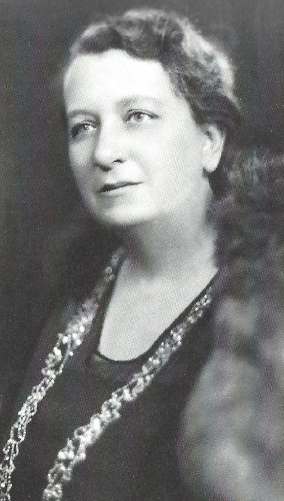
Belle Moskowitz, Mrs. M to her admirers or Mosky to her detractors, as advisor to Mayor Al Smith became one of the most powerful political voices in New York. She was not so powerful when she phoned Robert Moses. Reformers regarded Belle as one of their inner circle. She was a powerful voice supporting young working women and her recommendations for regulations to govern working conditions were accepted.

In her phone call, she told Moses that Governor Smith had decided to set up a commission to implement vast public service and infrastructure changes to the City of New York, and that Governor Smith was looking for a Chief of Staff. Would Dr. Moses be interested in the job? Moses said he would. On Belle’s recommendation, Moses got the position. Moses had his own office, at last, at the Hall of Records.

The election of 1918 was the first in which women were involved. Belle’s influence with the Governor came mainly from the advice she gave him about how to win over this new electorate. Smith was an underdog in this election and Smith began to rely more and more on Belle’s advice. Belle persuaded Smith to reform the state’s administrative machinery, even in the face of the Governor’s Tammany supporting backers, by forming a Commission that included in its title “Retrenchment” which appealed to native Tammany conservatism and served to split the Republican vote.

The existing administrative machinery was in a corrupt mess, with budgets and strategy run not by the governor but by the heads of many committees and the legislature, all serving their individual interests. The bureau argued that power, as well as responsibility should be in the hands of the Governor and his representatives with the legislature reduced to a reviewing role.

When Moses began his work as Chief of Staff, it was Belle who taught him how to get things done. She taught him the statecraft of dealing with the various factions, the art of the possible. There was no doubt that she was the boss, but Moses, despite his exasperation with some of her decisions, was learning fast. By the spring of 1919, the Commission was almost entirely in Moses’s hands.

Smith, emboldened by his success with the more progressive elements, persuaded to members of the Commission to raise a budget themselves. Once they had done this, Smith supported the Commission fully. Moses was an inspiring leader because of his frankness and hard work as well as his devotion to the public interest.

The Commission began running out of money and the staff had to be let go. Moses finished the report himself. Its success was based on its clarion call and its clarity. Although the Governor held the powers, he was answerable to the electors and an independent watchdog. This democratic element won all sides over. However, other contributors, including the original work of the Bureau, were not mentioned. Moses claimed full credit. The report was published in October 1919. Al Smith agreed to fight for its implementation.

Moses directed the project to build support for Smith’s position, tempered by Belle Moskowitz’s advice. Moses took charge of answering all questions regarding the report. He was confidant of passing the necessary bills during the Governor’s next term. However, Governor Smith lost the next election and the Commission was disbanded.

By 1922, Moses was working for the New York State Association. He continued to talk with Al Smith who was now working for a transport company. He continued to tell Smith about his plans and dreams, and Al Smith listened.

Analysis & Key Takeaways
  • State-Crafts and Politics involve appealing to desperate clusters of voters without the other clusters realizing you are talking to people other than yourself. Splitting the retrenchment conservative voters;
  • Devotion to the public interest is a central theme for Moses: however, it is also a good cover for all kinds of prejudiced decision-making Naturally, we gravitate to the most egregious examples: because hey are easy to remember; but he will always have the defense that he was acting in the public interest. How do you measure what the public interest is? In a Venn diagram, Moses’ self-interest appears to be significantly tied to the public interest;
  • Moses seems to have taken full credit for the report since he was the last man standing ad still working on it;
  • Fait Accompli strategy is to start a project that cannot be fully paid for due to the agreed budget but then embarrass the government into paying for the remaining.
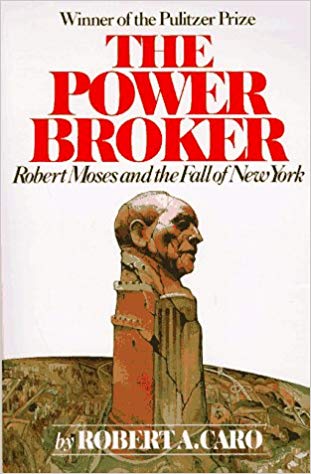
The Power Broker is a Pulitzer Prize Winner
Chapter 1Chapter 2Chapter 3
Chapter 4Chapter 5Chapter 6
Chapter 7Chapter 8Chapter 9
Chapter 10Chapter 11Chapter 12
Chapter 13Chapter 14Chapter 15
Chapter 16Chapter 17Chapter 18
Chapter 19Chapter 20Chapter 21
Chapter 22Chapter 23Chapter 24
Chapter 25Chapter 26Chapter 27
Chapter 28Chapter 29Chapter 30
Chapter 31Chapter 32Chapter 33
Chapter 35Chapter 36Chapter 37
Chapter 38Chapter 39Chapter 40
Chapter 41Chapter 42Chapter 43
Chapter 44Chapter 45Chapter 46
Chapter 47Chapter 48Chapter 49
Chapter 50

Power Broker by Robert Caro – Summary & Analysis for Chapter 5

Chapter 5 – Age of Optimism

Moses’s first task was to challenge the dominance for Tammany Hall, and for that he had to control the city’s jobs – 50,000 City employees. Patronage was the lever of power in New York City, and by taking control of this lever, Moses sought to gain the power he needed to change the city.

Tammany resisted changes to the Civil service. Employment was currently managed by patronage and bribery and a maze of technicalities had been historically put in place to prevent change. The Mayor turned to Moses to handle these technicalities.  However, Moses’s thesis was published, and his support of only educated gentlemen for positions in the Civil Service caused a scandal, and the offer was withdrawn.

Moses continued at the Bureau with more assistants. Moses’s first step was the measure of efficiency ratings for employees. In order to do this, each role had to be broken down into measurable parts. By 1915, Moses was ready to write his efficiency report. He was given a desk in the Municipal Building, his first foot in the City Hall door.

Robert married Mary in 1915 with a child in 1916. Although Moses’s mother pushed him to take a salary, Moses did not seem interested in money. He was more driven by his ideas for change and attaining the power to make them real.

Moses wrote that pay grades should be consistent across departments. The Civil Service should be structured into sixteen categories and promotion should be given purely on documented, mathematically verifiable merit. Moses was accused of downplaying the human element in this calculation but Moses had an almost religious belief in his mathematical models.

The first reactions to Moses’s ideas were positive. Mitchell announced that he would push for adoption. However, Tammany Hall was girding itself for a fight. Many of New York’s municipal employees would lose money due to Moses’s changes. At meetings, Moses would suffer a hail of abuse as he outlined his plans. Some of his supporters began to have doubts, especially those whose salary would be reduced. At the height of these doubts, Tammany Hall held a commission to consider the proposals. The decision was to modify the proposal, to consider individual cases and to slow down implementation. Different Civil Service levels were added by the City Alderman. By these methods, Tammany Hall successfully delayed the reforms.

Moses’s loss of optimism was mirrored by the country’s anxiety as it moved towards war. Mayor Mitchell popularity was also waning, not only with the public but with Moses as well as Mitchell had turned down Moses’s plans for Riverside Drive.

In 1917 Moses redoubled his efforts to push through his changes. Mitchell was up for re-election and was being contested heavily by Tammany Hall and their candidate, “Red” Mike Hyland, won. Progressivism was dead, as were Moses’s reforms.  Science and logic were not enough. Moses needed power.

In 1918, Moses was looking for a job. He tried the shipbuilding industry, where he again proposed reforms which were rejected. He had to go back to the Bureau for a job with a diminished status.

His second daughter was born. Money was short and debts were rising. The apartment was too small and a larger one was out of the question. The war was over. Woodrow Wilson was fading. Tammany’s Mayor Al Smith was in charge in New York. Moses’s contacts were gone. He seemed to have nowhere to go. And then he received a phone call from Belle Moskowitz, Al Smith’s political advisor.

Analysis & Key Takeaways:
  • Robert Moses was not motivated by money for the most part to Caro. This notion ends up being critical for evaluating what kind of lust for power, questionable ethics, vindictiveness and racism is exhibited by Moses’ practices.
  • Money is an approximation of value for Moses; People who are motivated by material value (goods, money) are doomed to chase short-cuts to get more money (easy to see corruption). People who are motivated by abstract goods are more likely to achieve great amounts of influence through hard work (of course); so having cheap tastes and be impactful will ward off claims of corruption even if you’re value are to undermine the prospects of the poor to advance the interests of the wealthy as Caro makes clear in this book;
  • Another example of the power of networks: Tammany Hall seems to have relied on a cultural group, Irish Catholics, to power a political block that gained disproportionate influence on the general public. These networks of influence aren’t explicit but show the underlying structure to be game-able by interest groups that aren’t explicit. As long as decisions are being made to advance the interest of the public, then there is no problem, right?
  • Measuring the efficiency of employees is very subjective and yet also necessary: you do not want to be making hiring and firing decisions based on a gut feeling; you also do not want to be ‘building a case’ for people you just don’t like. Instead, you ought to try to establish key performance indicators so that the employee and the manager can determine whether they are heading in the right direction or if there is not a good fit; the data collected needs to be independent of any single person otherwise it is all about relationships which is the world that Robert Moses thrived in.
The Power Broker is a Pulitzer Prize Winner
Chapter 1Chapter 2Chapter 3
Chapter 4Chapter 5Chapter 6
Chapter 7Chapter 8Chapter 9
Chapter 10Chapter 11Chapter 12
Chapter 13Chapter 14Chapter 15
Chapter 16Chapter 17Chapter 18
Chapter 19Chapter 20Chapter 21
Chapter 22Chapter 23Chapter 24
Chapter 25Chapter 26Chapter 27
Chapter 28Chapter 29Chapter 30
Chapter 31Chapter 32Chapter 33
Chapter 35Chapter 36Chapter 37
Chapter 38Chapter 39Chapter 40
Chapter 41Chapter 42Chapter 43
Chapter 44Chapter 45Chapter 46
Chapter 47Chapter 48Chapter 49
Chapter 50

Power Broker by Robert Caro – Summary & Analysis of Part 2 – Chapter 4

PART TWO – THE REFORMER

Chapter 4 – Burning

Moses entered public service at the same time as the Progressive Movement had gained momentum, a desire to tackle the challenges of poverty and the new industrial order. Moses supported this movement by attempting to make American public service organisations more meritocratic. American institutions had no historical frameworks like Europe. Moses saw them as inefficient and corrupt. The Bureau of Municipal Research would be at the forefront of Progressivism in New York, whose drive was to improve government processes and operations in terms of efficiency as well as developing budgetary systems to support development by disseminating facts about how governments actually ran.

The findings of the bureau conflicted with Tammany Hall, the powerful New York Irish/Catholic political organisation that had run New York for decades. The Bureau developed new techniques to improve local government, including a budgetary system, allowing voters to be able to judge the performance of their local governors. This led to anti-Tammany, Reformer candidates to be elected to office.

After some time at the training school of the Bureau, Moses became impatient with the leg-work and report writing. He applied to join the Bureau, agreeing to do so without salary, and he was admitted. He began to make visits to the wasteland of Riverside Drive in the Bronx and walk through the nearby park a stagnant ex-landfill pervaded by the stench of trains going towards the abattoir. Here he dreamed of renewal, of a great highway along the waterfront and deal with the on-going problems of the ugly train tracks. His burning ideas of city improvements began to grow from this point. Now he needed to put them into practice.

Moses became critical of the Bureau for their lack of action.

Mary-Louise Simms was the only one to be sympathetic. Previously working for the Governor of Wisconsin, she had an instinct for politics and what it could do. Mary came to New York to work for the Bureau. Moses fell in love with her.

In 1914 John Mitchell became Mayor. When he looked to appoint a new Civil Service Commissioner, Moses was the favoured candidate.

Analysis & Key Takeaways:
  • A lot of things that are obvious for improving the machinery of government have already been contemplated by bureaucrats in the early 20th century. For example, rubrics for evaluating work, key performance indicators basically metrics for management which are routinely thwarted by human nature, self-reporting and the problem of data capture;
  • Government data/knowledge is a currency in the civil service. Understanding how an organization works is rarely written down. In order to reduce corruption of civil servants, that currency needs to be devalued by making it radically transparent within the civil service and by making the system more accessible to the public. That is with the caveat that the public can see the interconnection of cause and effect. One of the side-effects is that if the public has more information, you’ll need a filter in order to evaluate incoming criticism from the public who may not fully understand the (holistic) system of levers and responsibilities and balancing that goes on in government;
  • Another challenge with making data/knowledge more transparent is that a lot of data/knowledge is trapped in the minds of the civil servants themselves; and they don’t have time and zero inclination to write things down or even divulge their knowledge in any communicable format since….again, data/knowledge is a currency in the civil service;
The Power Broker is a Pulitzer Prize Winner
Chapter 1Chapter 2Chapter 3
Chapter 4Chapter 5Chapter 6
Chapter 7Chapter 8Chapter 9
Chapter 10Chapter 11Chapter 12
Chapter 13Chapter 14Chapter 15
Chapter 16Chapter 17Chapter 18
Chapter 19Chapter 20Chapter 21
Chapter 22Chapter 23Chapter 24
Chapter 25Chapter 26Chapter 27
Chapter 28Chapter 29Chapter 30
Chapter 31Chapter 32Chapter 33
Chapter 35Chapter 36Chapter 37
Chapter 38Chapter 39Chapter 40
Chapter 41Chapter 42Chapter 43
Chapter 44Chapter 45Chapter 46
Chapter 47Chapter 48Chapter 49
Chapter 50

Power Broker by Robert Caro – Summary & Analysis of Chapter 20

Chapter 20 – One Year

In early 1934, Moses was appointed as Commissioner for State Parks. Moses moved quickly to get rid of all staff who could not work at the pace he required. Moses then hired an army of architects and engineers from all over New York State. The ranks of Civil Works Administration (CWA) workers were also being addressed through discipline and training enforced by new superintendents, backed up by the local police.

The winter was bad that year with temperatures plummeting to -14C. Nevertheless, workers were still expected to wield their pickaxes, shifts working around the clock. By May however, the weather changed, and New Yorkers headed for the parks. By then, the parks had been transformed through the completion of 1700 projects.

Moses was not only transforming existing parks but was creating new ones using as much public land as could be identified. During a six-month period, Moses created nearly seventy green spaces, playgrounds and parks amongst the slum tenements. Other government departments looked on in anguish as all their land, planned for housing and other public works, was eaten up by park development. Occasionally, La Guardia would intervene, but for the most part, Moses had his way.

The press and people of New York cheered the new developments. The achievements of the new Commissioner in his first six months of office were seen as near miraculous. His picture stared out from the city newspapers over one hundred times that year. Al Smith however, was struggling in his new role. He was being rebuffed by Roosevelt and his association with the new Empire State Building was becoming stressful due to the difficulty of finding tenants. His one shaft of light was the opening, by Moses, of the Central Park Zoo. Moses had arranged a hero’s welcome for Smith at the opening ceremony, making him Honorary Night Superintendent of the Central Park Zoo.

Moses’s attention to detail was becoming his hallmark. Even though finances were tight, his prompted his architects and engineers to use their imagination. Tight budgets meant that the materials used had to be cost-effective, but that did not seem to limit unduly the scale and attractiveness of the Zoo and associated park developments.

The Triborough Bridge development meanwhile was coming the fruition, linking three boroughs and two islands. More than five thousand men worked on the site and many times more were servicing the construction from across the state. The development totally transformed traffic flow across the city and between the city and neighbouring states. The combination of cheap labour, bridges and parkways to serve the parks, and attractive parks to persuade motorists to pay the bridge tolls, meant that even in the age of depression, a huge program of public works could be achieved.

Analysis & Key Takeaways
  • Parks were more popular than movie theatres in the early 20th century which illustrates just how much the future is an undiscovered country;
  • Robert Moses’ success in understanding that the toll revenue from the infrastructure projects were critical to not just paying down the Bonds but could be a source of further capital to follow his goals; he would draft those goals on yellow legal pad;
  • Moses issued bonds outside of the tax revenue and normal budgetary powers, so elected officials were then going to Moses to decide what they should be investing in;
  • Moses was a passenger on many small plane flights over Manhattan so that he could plan his next projects in 1934, hence the benefit of a higher vantage point.
The Power Broker is a Pulitzer Prize Winner
Chapter 1Chapter 2Chapter 3
Chapter 4Chapter 5Chapter 6
Chapter 7Chapter 8Chapter 9
Chapter 10Chapter 11Chapter 12
Chapter 13Chapter 14Chapter 15
Chapter 16Chapter 17Chapter 18
Chapter 19Chapter 20Chapter 21
Chapter 22Chapter 23Chapter 24
Chapter 25Chapter 26Chapter 27
Chapter 28Chapter 29Chapter 30
Chapter 31Chapter 32Chapter 33
Chapter 35Chapter 36Chapter 37
Chapter 38Chapter 39Chapter 40
Chapter 41Chapter 42Chapter 43
Chapter 44Chapter 45Chapter 46
Chapter 47Chapter 48Chapter 49
Chapter 50